How to Know When It Is Time to Change Careers
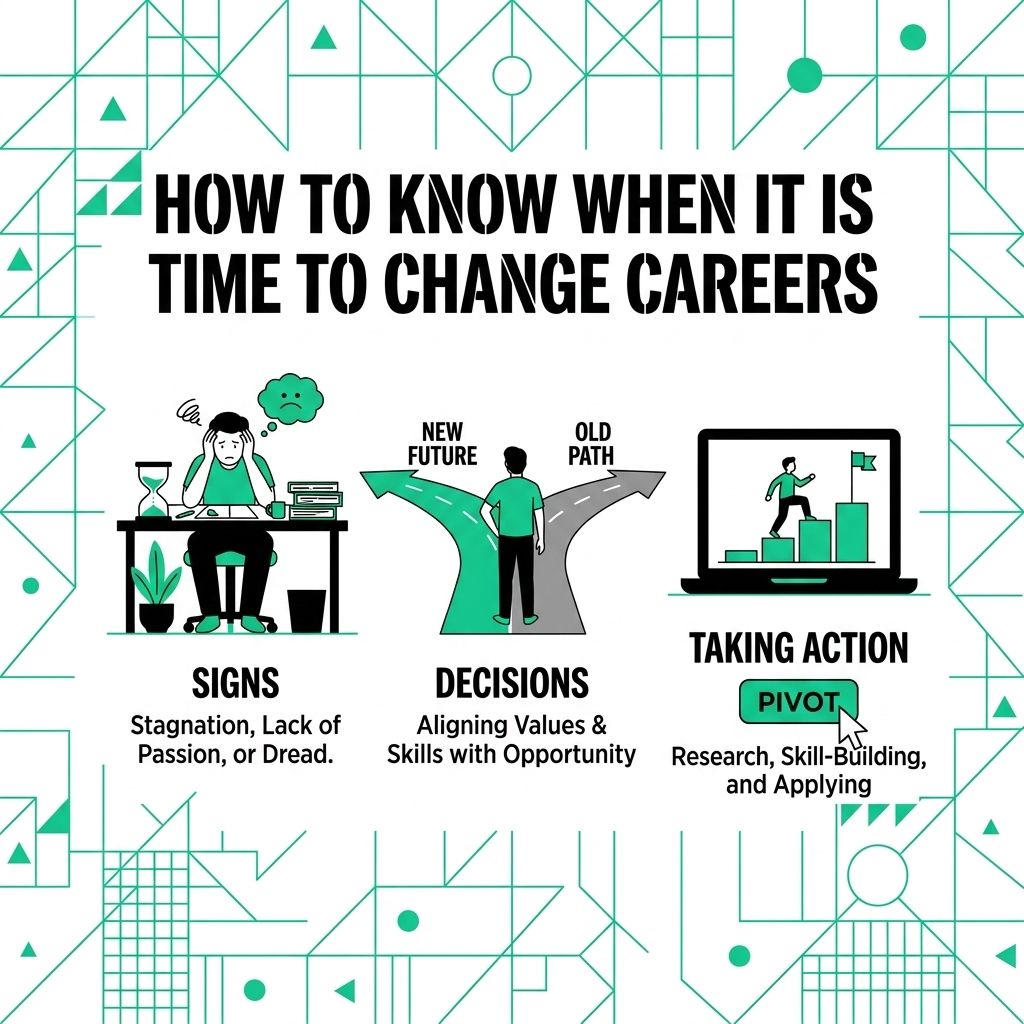
The Cost of Staying Put Too Long
Some hard seasons pass. Some do not. The tricky part is knowing whether you are tired of a job, tired of a company, or tired of the career path itself.
Do not make the decision from one awful week. Look for patterns. If the work keeps draining you after rest, honest conversations, and small changes, it may be time to look at a different path.
Find the Core Issue
Career change is a big move, so start with the real problem. A bad manager, heavy workload, personal stress, or unclear role can feel like a career crisis even when the field itself still fits you.
Step one is outside stress
Life outside work affects how work feels.
- Input: Current stress, health, finances, relationships, and family responsibilities.
- Action: Ask whether the job itself is the main problem or whether work is carrying stress from somewhere else.
- Output: A clearer sense of whether you need job support, personal support, or both.
Step two is burnout or boredom
These can look similar, but they usually need different responses.
Plan the Transition
Once you know the career path itself no longer fits, turn the feeling into a plan. CareerOneStop's career changer tools can help you compare your current skills with related careers.
Use tools like that to widen your options. A career change does not always mean starting from zero.
Step three is your skill inventory
Make a private list before you rewrite your resume.
- Input: Work history, tools, projects, people skills, technical skills, and results.
- Action: Write down what you can prove, not just what your title says.
- Output: A map of transferable skills.
Step four is a list of possible paths
Look outside your usual job titles. Read roles in adjacent fields and notice which responsibilities sound familiar or interesting.
- Input: Job boards, career tools, industry groups, and conversations with people in other roles.
- Action: Compare your skill inventory with job postings that interest you.
- Output: A short list of target careers and the gaps you would need to close.
Career change should feel thoughtful, not reckless. Test your assumptions, gather proof, and move when the next path makes more sense than staying where you are.
For a related Working Nomads article, read how to demonstrate added value as a remote employee for beginners before you decide your next step.
What to Read Next
Read how to resolve a conflict with a coworker if you want a related next step on career growth.
Use how to succeed in the remote hiring process next steps when you need more context before your next decision.
Publishing Articles or Documentation? Remove AI Slop.
Remove repetitive AI filler phrases, robotic patterns, and AI slop to make your content human, engaging, and original.
Applying for Growth Marketing & SEO Specialist Roles?
Boost your callback rate with our 100% free ATS-optimized resume template tailored specifically for remote Growth Marketing & SEO Specialist positions.
Remote Growth Marketing & SEO Specialist Resume Template
Built for performance marketers and organic search experts scaling visitor-to-customer acquisition funnels.
ATS Keyword Scanner
Check your resume against remote job descriptions to find missing keywords and boost your score.
Tailored Cover Letter
Generate a personalized, high-converting remote cover letter emphasizing async communication.