How Remote Work Can Hold Up During Economic Downturns
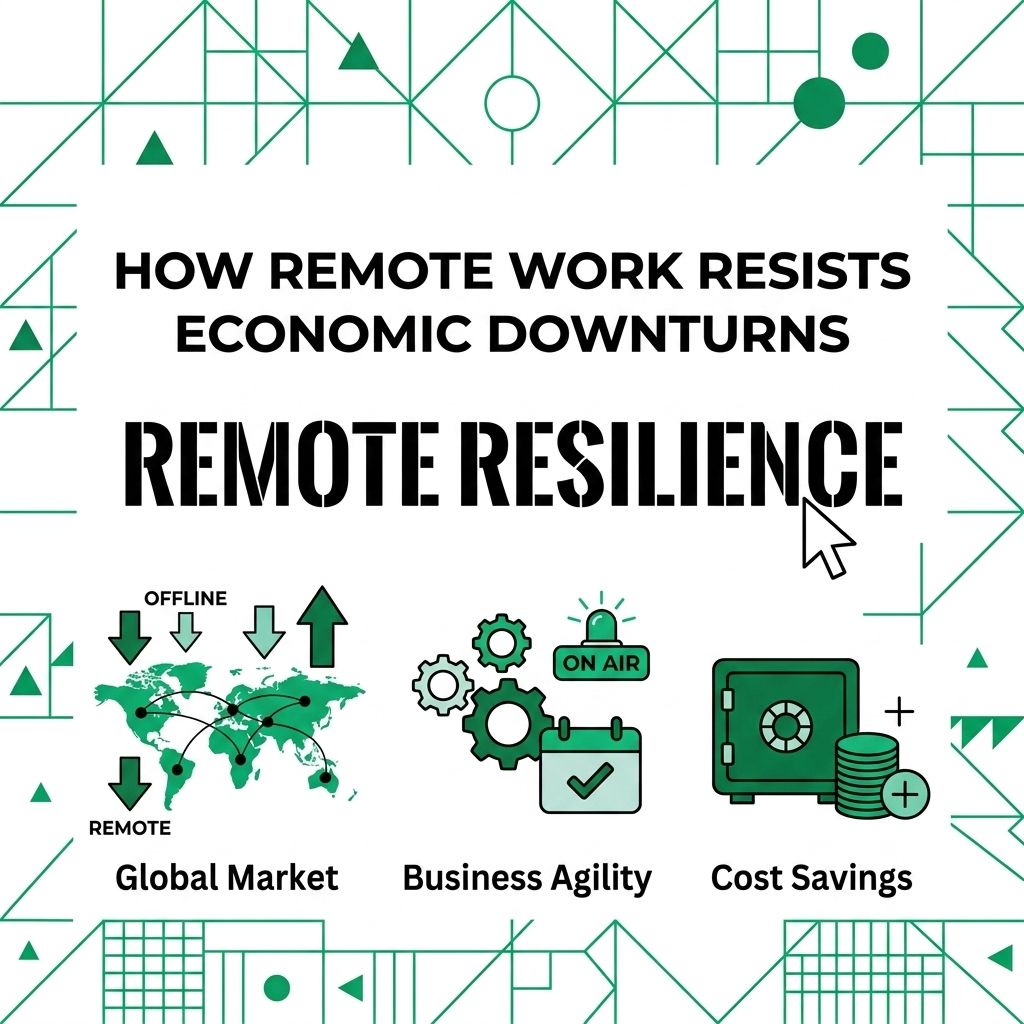
Economic downturns force companies to look closely at costs. Remote work can help in some cases because it may reduce office spending, widen hiring options, and make teams less tied to one location.
For a related Working Nomads article, read how to ask for vacation days when you work remotely for career changes before you decide your next step.
That does not make remote jobs recession-proof. Companies still cut roles when revenue drops. Your goal is to show clear value and choose employers with strong fundamentals.
Know Why Remote Work Can Help Employers
Office space, commuting expectations, and location-based hiring can make companies less flexible. Remote work gives some teams more room to adjust.
BLS research on remote work and productivity found that industries with large increases in remote work often also had substantial output increases during the pandemic period. That does not prove remote work caused every gain, but it does show why many companies now see remote work as part of their operating model.
Source: BLS analysis of remote work and productivity
Show Your Value Clearly
During a downturn, managers need to know what work protects revenue, customers, product quality, or core operations.
Write down your wins. Share concise updates. Tie your work to business outcomes when you can. A remote employee who stays visible through results is easier to trust.
- Document results Track shipped work, customer wins, savings, and solved problems
- Share useful updates Tell your manager what moved and what is blocked
- Work on core priorities Spend more time on tasks tied to revenue or retention
Build Skills That Travel
Some skills stay useful across companies and market cycles. Communication, project ownership, customer understanding, automation, security awareness, and data judgment all help.
Pick one skill that makes you more useful on a distributed team. Improve it before you need it.
Watch Company Signals
Remote work alone does not make a company stable. Look at revenue, funding runway, hiring pace, customer demand, leadership communication, and whether layoffs already happened.
Read job posts carefully. A company that hires for core product, customer support, infrastructure, or revenue roles may be in a different position than a company hiring only for speculative projects.
Keep Your Search Warm
Do not wait until a layoff to update your resume. Keep your profile, portfolio, and work samples current.
Build relationships with recruiters and peers before you need help. A quiet job search habit gives you options without panic.
Compare Risky and Resilient Remote Career Habits
| Career habit | Risky version | Stronger version |
|---|---|---|
| Work visibility | Assume good work speaks for itself | Share clear results and blockers |
| Skill growth | Wait until the market shifts | Build useful skills steadily |
| Company choice | Choose remote at any cost | Review business health and role importance |
| Job search | Start only after a layoff | Keep materials and relationships current |
Remote work can help companies adapt, but your career still needs active care. Stay visible, keep learning, and pay attention to the health of the company behind the job.
What to Read Next
Read how to plan features in an async first culture if you want a related next step on remote work.
Use how to negotiate your remote work agreement practical advice when you need more context before your next decision.
Publishing Articles or Documentation? Remove AI Slop.
Remove repetitive AI filler phrases, robotic patterns, and AI slop to make your content human, engaging, and original.
Applying for Senior DevOps & Cloud Engineer Roles?
Boost your callback rate with our 100% free ATS-optimized resume template tailored specifically for remote Senior DevOps & Cloud Engineer positions.
Remote DevOps & Cloud Engineer Resume Template
Tailored for Site Reliability Engineers and DevOps architects managing infrastructure as code and automated deployment pipelines.
ATS Keyword Scanner
Check your resume against remote job descriptions to find missing keywords and boost your score.
Tailored Cover Letter
Generate a personalized, high-converting remote cover letter emphasizing async communication.