How to Negotiate Your Remote Work Agreement
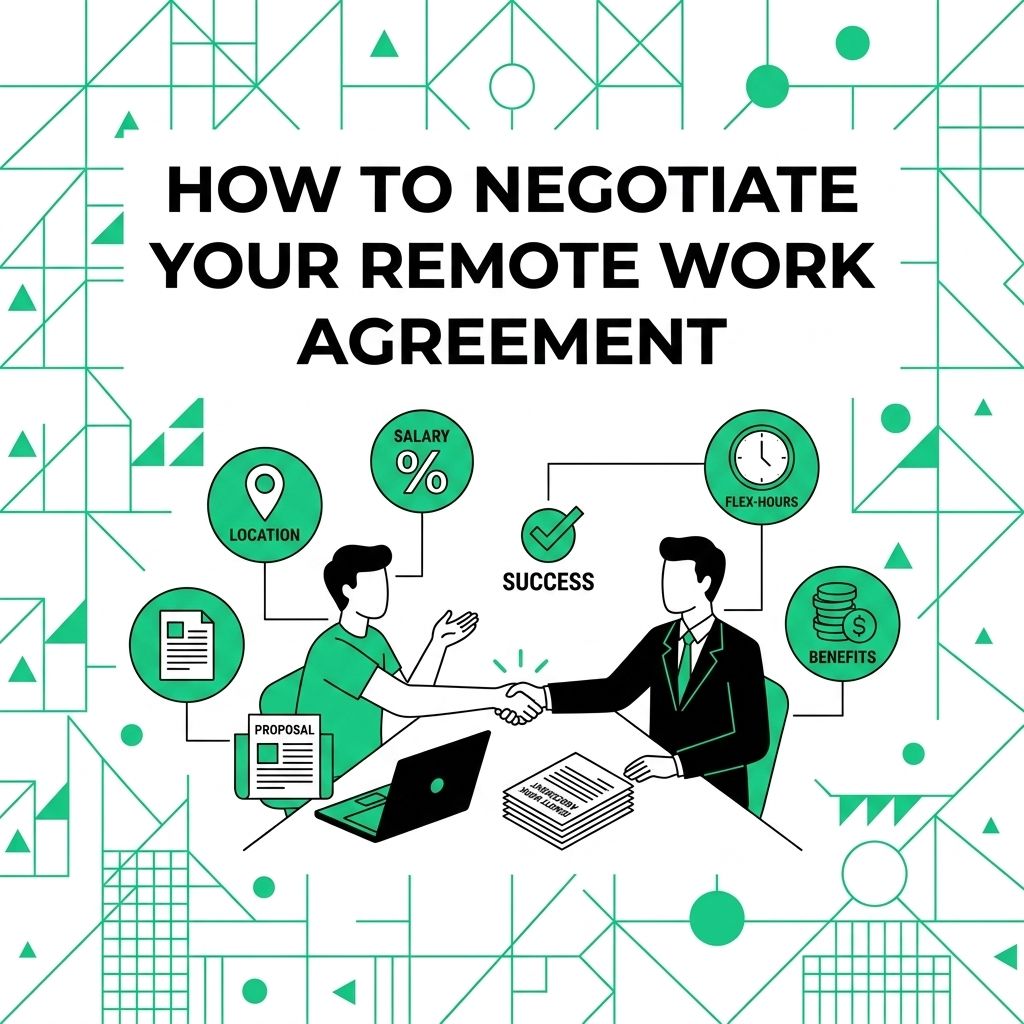
Remote work is easier to ask for when you treat it like a work plan, not a personal favor. Your manager needs to see how the setup will work, how your output will stay visible, and how the team will avoid confusion.
For a related Working Nomads article, read how remote workers can understand tax deductions checklist before you decide your next step.
Go into the conversation with a clear request. Do you want one remote day a week, a hybrid schedule, or a fully remote role? The more specific you are, the easier it is for your employer to respond.
Show the Business Reason First
Your employer will care about results first. Lead with that.
Explain how remote work helps you do better work. Maybe you get more deep focus time at home. Maybe your role needs fewer in-person meetings than it used to. Maybe you already proved you can work independently.
Use examples from your own performance. Mention projects finished on time, customer outcomes, manager feedback, or any remote days that already went well.
- Name the work benefit Show how the setup supports output, focus, or coverage
- Use your own proof Point to recent wins, deadlines, and measurable results
- Address likely concerns Talk about communication, meetings, security, and availability
Check the Company Policy Before You Ask
Do not walk in blind. Look for the company policy, employee handbook, or HR guidance first.
SHRM's remote work resources show why employers usually want clear rules around conduct, availability, equipment, and expectations. Use that same mindset in your request. Make the agreement easy for your manager to review.
Source: SHRM remote work resources
Offer a Trial Period
A trial period lowers the risk for both sides. Ask for 30, 60, or 90 days, then agree to review the setup.
Set the review criteria before the trial starts. What would count as success? Faster response times, steady output, fewer missed meetings, or better coverage across time zones? Clear terms help everyone avoid a vague judgment later.
Define How Communication Will Work
Remote work often fails when people guess what "available" means. Spell it out.
Share your working hours, meeting windows, response expectations, and preferred tools. Say how you will handle urgent issues. Tell your manager when you will send updates. A simple weekly check-in can do more than constant messages all day.
Prepare for Fair Compromises
You may not get everything you want right away. Decide what you can accept before the meeting.
A hybrid schedule might be a good first step. A trial period might be easier than a permanent change. Some companies also review pay, tax, or compliance rules when employees move to another city or country, so ask about those details before you relocate.
- Suggest a hybrid start Offer one or two office days if the team needs it
- Keep key meetings protected Stay available for team rituals and manager check-ins
- Ask about location rules Clarify pay, tax, benefits, and legal limits before a move
Put the Agreement in Writing
After the meeting, send a short recap.
List your schedule, work location, availability, communication plan, equipment needs, and review date. This does not need to sound legalistic. It just needs to prevent confusion later.
Compare Remote Work Request Options
| Part of the request | Weak approach | Strong approach |
|---|---|---|
| Main ask | "Can I work from home?" | "Can I work remotely on Tuesdays and Thursdays for 60 days?" |
| Proof | General preference | Recent results and independent work examples |
| Communication | Loose promises | Clear hours, check-ins, and response expectations |
| Review | No follow-up plan | A set date to review results |
Your best argument is not that remote work sounds nicer. It is that the work will still get done well. Make that easy to believe, and the conversation gets much better.
What to Read Next
Read how to call in sick when you work remotely if you want a related next step on remote work.
Use how to ask for vacation days when you work remotely for salary talks when you need more context before your next decision.
Publishing Articles or Documentation? Remove AI Slop.
Remove repetitive AI filler phrases, robotic patterns, and AI slop to make your content human, engaging, and original.
Applying for Senior Backend Engineer Roles?
Boost your callback rate with our 100% free ATS-optimized resume template tailored specifically for remote Senior Backend Engineer positions.
Remote Backend Engineer Resume Template
Focused on API throughput, database scaling, data modeling, and fault tolerance for distributed systems.
ATS Keyword Scanner
Check your resume against remote job descriptions to find missing keywords and boost your score.
Tailored Cover Letter
Generate a personalized, high-converting remote cover letter emphasizing async communication.