The Top 10 IT Jobs
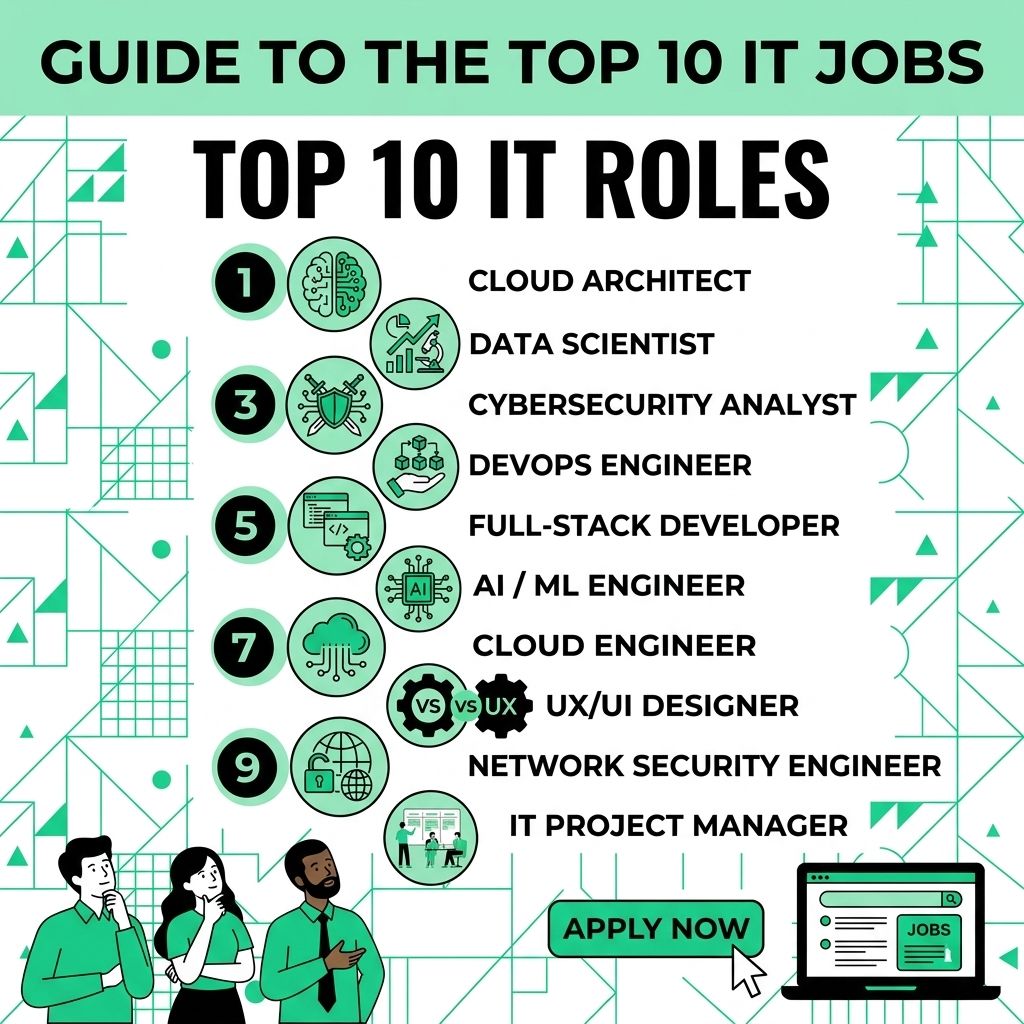
IT teams need more than one kind of technical skill. A company may need someone to manage systems, protect data, support employees, build software, and plan long-term technology decisions.
The Bureau of Labor Statistics says computer and information technology occupations are projected to grow much faster than average from 2024 to 2034, with about 317,700 openings projected each year on average. That is a broad category, so the right path still depends on your strengths.
Strategic Oversight
These roles connect business goals with technical decisions.
Computer and Information Systems Manager
Managers translate business needs into technical plans. They set priorities, manage budgets, and guide IT teams toward systems that support the company.
- Input: Business goals, budget limits, and technical constraints.
- Output: Clear roadmaps, stronger systems, and better team coordination.
Software and Hardware Engineering
These roles build the products, tools, and physical systems that other people rely on.
Computer Software Engineer
Software engineers create applications, internal tools, and product features. They also debug problems, review code, and explain technical tradeoffs.
- Input: Product requirements and user workflows.
- Output: Tested code and working applications.
Computer Hardware Engineer
Hardware engineers design and test physical computer components, boards, processors, and devices.
- Input: Performance needs and physical design constraints.
- Output: Tested hardware designs ready for production or review.
Infrastructure Architecture
These jobs keep systems connected, reliable, and easier to maintain.
Computer Systems Analyst
Systems analysts study how a business works and recommend better technology setups.
- Input: Current system problems and user requirements.
- Output: Clear technical plans for software, hardware, or process changes.
Network Systems and Data Communications Analyst
These analysts review how information moves through a company. They look for slow points, weak connections, and better ways to route data.
- Input: Network traffic, bandwidth needs, and user complaints.
- Output: Better network plans and hardware recommendations.
Network and Computer Systems Administrator
Administrators set up and maintain the systems employees use every day.
- Input: Network plans, devices, users, and access rules.
- Output: Working networks, account access, backups, and system updates.
Data Management and Security
These roles protect information and help people use it without creating unnecessary risk.
Database Administrator
Database administrators organize, secure, and maintain business data.
- Input: Company data, access needs, and security rules.
- Output: Reliable databases, cleaner queries, and safer access.
Information Security Analyst
Security analysts look for risks, monitor systems, and help prevent attacks.
- Input: Alerts, logs, policies, and threat information.
- Output: Stronger defenses, better response plans, and fewer security gaps.
Computer and Information Research Scientist
Research scientists work on hard computing problems, new methods, and advanced systems.
- Input: Technical questions that do not have easy answers.
- Output: Research, prototypes, algorithms, or new computing methods.
Technical Support and Maintenance
Support roles keep the day-to-day work running.
Computer Support Specialist
Support specialists help users solve hardware, software, account, and access problems.
- Input: Broken equipment, software issues, and user questions.
- Output: Restored access, fixed issues, and clearer support records.
Pick the Right IT Path
Do not choose an IT job only because it sounds impressive. Pick the role that matches how you like to solve problems.
If you like helping people directly, start with support. If you like building, look at software or hardware. If you like risk and investigation, explore security. Then use Working Nomads to find remote IT jobs that fit the path you want to grow into.
For a related Working Nomads article, read how to demonstrate added value as a remote employee for team planning before you decide your next step.
What to Read Next
Read best it jobs if you want a related next step on career growth.
Use how to succeed in the remote hiring process for better applications when you need more context before your next decision.
Publishing Articles or Documentation? Remove AI Slop.
Remove repetitive AI filler phrases, robotic patterns, and AI slop to make your content human, engaging, and original.
Applying for Senior Backend Engineer Roles?
Boost your callback rate with our 100% free ATS-optimized resume template tailored specifically for remote Senior Backend Engineer positions.
Remote Backend Engineer Resume Template
Focused on API throughput, database scaling, data modeling, and fault tolerance for distributed systems.
ATS Keyword Scanner
Check your resume against remote job descriptions to find missing keywords and boost your score.
Tailored Cover Letter
Generate a personalized, high-converting remote cover letter emphasizing async communication.