Remote Work Benefits for Employers
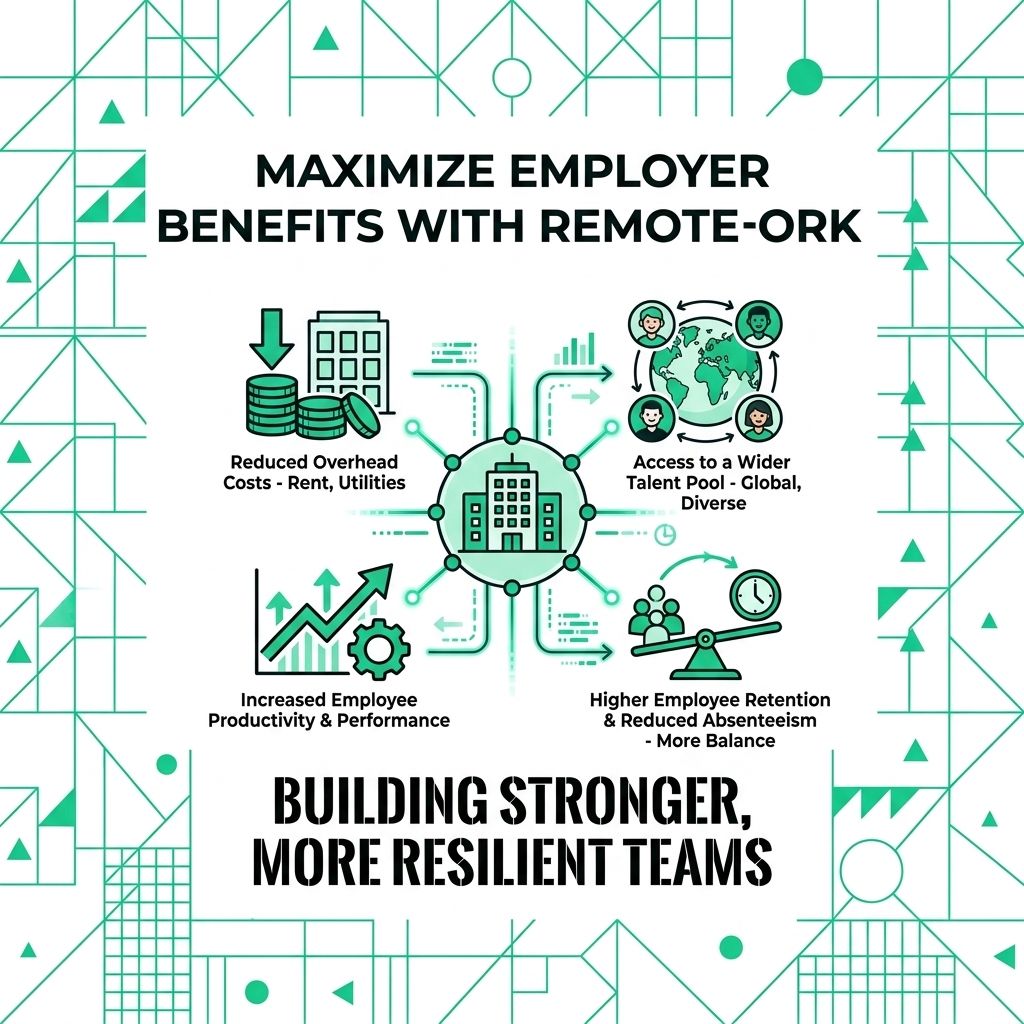
Remote work is not just an employee perk. For employers, it can reduce overhead, widen the hiring pool, and help teams keep strong people longer.
For a related Working Nomads article, read how remote workers can understand tax deductions for beginners before you decide your next step.
The benefits are real, but they are not automatic. A company still needs clear expectations, good management, strong security, and a hiring process built for remote roles.
Improve Productivity With Better Focus
Remote work can help employees protect deep focus time. Fewer desk interruptions, fewer commute delays, and more control over the workday can make a difference.
Do not promise that every remote worker will outperform every office worker. The evidence is more useful when it stays specific. A Stanford study on working from home found a 13% performance increase for call center employees at Ctrip assigned to work from home, with part of the gain tied to more minutes worked and part tied to higher call volume per minute.
- Protect focus time Let employees handle deep work without constant interruptions
- Measure output clearly Track results instead of desk presence
- Match the role to the setup Use remote work where the job can be judged by outcomes
Reduce Office Costs
Office space is expensive. Remote work can lower rent, utilities, parking costs, office supplies, and some furniture needs.
Savings depend on the setup. A fully remote company may reduce more office costs than a hybrid company. A remote-first company may also spend more on home office support, software, security, and team travel. Count both sides before you call it savings.
Hire From a Larger Talent Pool
Remote hiring lets you search beyond one city. That can help when the role needs a rare skill or when the local market is too expensive.
It also helps candidates who cannot relocate or commute every day. Parents, caregivers, people with disabilities, and workers outside major hiring hubs may be easier to reach when location is less strict.
Support Retention
People often value flexibility. A remote or hybrid option can make it easier for employees to stay when their life changes.
Think about the cost of replacing a strong employee. Recruiting, interviews, onboarding, and lost context all add up. Remote work can support retention when employees still get fair feedback, growth, and connection.
Give Teams More Schedule Flexibility
Remote teams can cover more hours when work is planned well. This helps customer support, global teams, and companies with teammates across time zones.
Flexibility needs structure. Set core hours, meeting norms, and handoff rules so people are not expected to be online all day.
Improve Communication With Better Systems
Remote work pushes companies to write things down. That can be a benefit.
Clear docs, project boards, recorded decisions, and written updates reduce the need for hallway conversations. New hires can catch up faster when important context lives somewhere they can find it.
Compare Remote Work Benefits for Employers
| Employer benefit | Weak setup | Strong setup |
|---|---|---|
| Productivity | Trust vague activity signals | Measure clear outcomes |
| Costs | Assume every expense disappears | Compare office savings with remote support costs |
| Hiring | Stay limited to one city | Recruit from approved locations |
| Retention | Offer flexibility with no support | Pair flexibility with feedback and growth |
Remote work can help employers, but only when the company treats it like an operating choice. Set the rules, measure the work, support the team, and the benefits become much easier to see.
What to Read Next
Read how remote work policies can support diversity if you want a related next step on remote work.
Use how to ask for vacation days when you work remotely with clear steps when you need more context before your next decision.
Publishing Articles or Documentation? Remove AI Slop.
Remove repetitive AI filler phrases, robotic patterns, and AI slop to make your content human, engaging, and original.
Applying for Senior Customer Support Specialist Roles?
Boost your callback rate with our 100% free ATS-optimized resume template tailored specifically for remote Senior Customer Support Specialist positions.
Remote Customer Support Specialist Resume Template
Highlights customer empathy, ticket resolution speed, Zendesk/Intercom power workflows, and self-serve documentation.
ATS Keyword Scanner
Check your resume against remote job descriptions to find missing keywords and boost your score.
Tailored Cover Letter
Generate a personalized, high-converting remote cover letter emphasizing async communication.