Pros and Cons of Working at Home
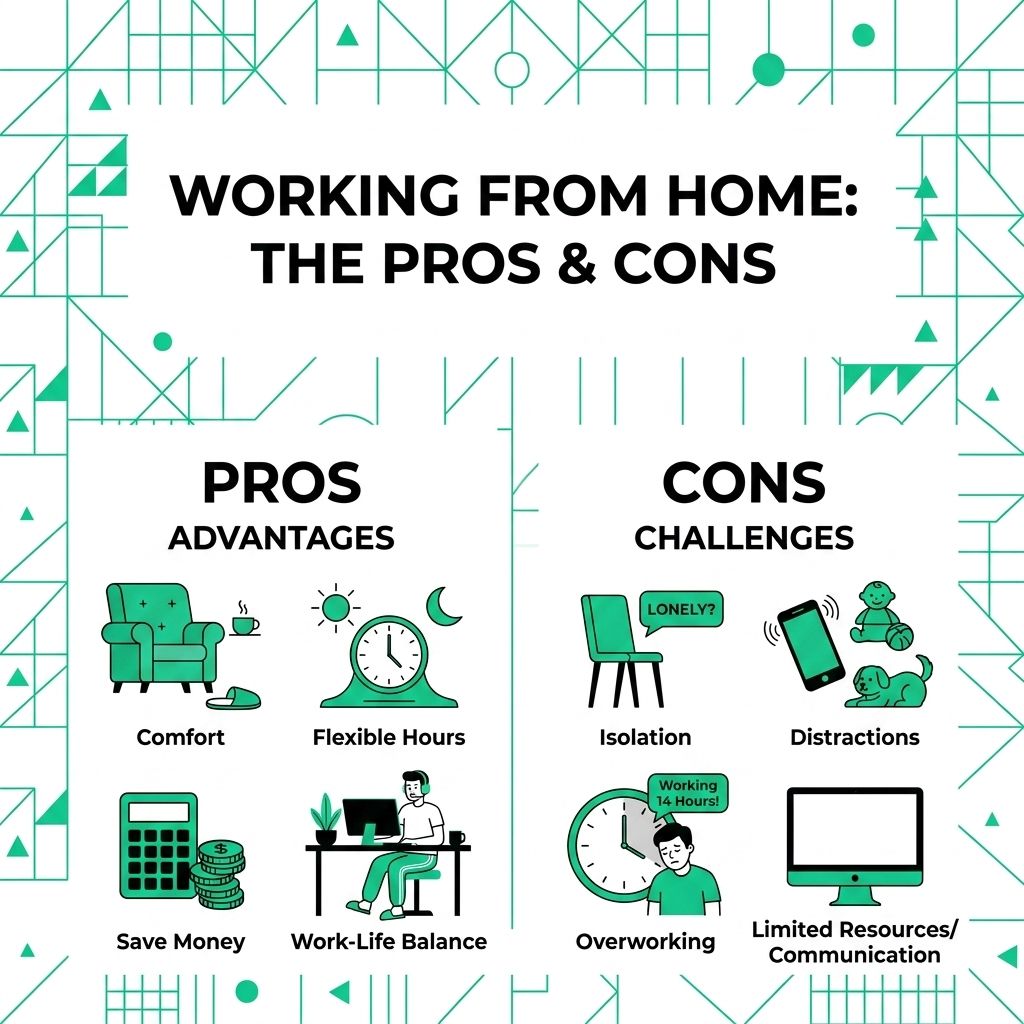
The Reality Behind Remote Work
Working at home can save time and give you more control over your day. It can also make your home feel like an office that never closes.
Gallup has reported that remote workers can be more engaged but also more isolated and emotionally strained. That is the honest version: remote work can help, but it needs structure.
The Practical Advantages of Remote Work
The benefits are real when the role fits your life and you have enough discipline to protect your day.
Direct Financial Savings
Working from home can reduce commuting, parking, office clothing, and daily lunch costs.
- Input: Calculate what you spend each month on commute costs, clothing, and food away from home.
- Output: Decide whether those savings should go toward debt, savings, or a better home office setup.
More Unpaid Time Back
Commuting takes time before the paid workday even starts. Removing or reducing that commute can give you more time for sleep, family, exercise, or focused work.
- Input: Track your commute time for a normal week.
- Output: Decide how you would use that time if you worked from home.
Fewer Office Distractions
Some people focus better away from office chatter, walk-up questions, and unnecessary meetings. Home can give you quieter blocks for deep work.
That does not happen automatically. You still need boundaries, a work zone, and a plan for digital distractions.
More Flexibility for Family Needs
Remote work can make school pickup, appointments, caregiving, or household needs easier to handle.
The key word is easier, not effortless. You still need clear work hours so flexibility does not turn into constant interruption.
The Hidden Costs and Disadvantages
Remote work brings its own friction. Think through these points before you leave an office routine behind.
Taxes for Independent Workers
If you work as an independent contractor, taxes may become more complicated. You may need to handle estimated payments, self-employment tax, and business deductions.
- Input: Set aside money from each payment and keep clean records.
- Output: Reduce the chance of a painful tax surprise later.
Speak with a qualified tax professional before making assumptions about deductions.
Home Distractions
Your home has its own interruptions: chores, family, deliveries, noise, and the temptation to step away for “just a minute.”
- Input: Choose a dedicated workspace and share your work hours.
- Output: Create a clearer line between work time and personal time.
Professional Isolation
Working solo can make you feel disconnected from coworkers, mentors, and industry conversations.
- Input: Schedule check-ins, join professional communities, and keep networking even when you are not job hunting.
- Output: Build a support system that does not depend on office hallways.
Plan the Transition
Working from home is not automatically better or worse. It depends on your job, your household, your personality, and the systems you build.
Before you switch, look at the money, the space, the social tradeoffs, and your ability to manage yourself. A good remote setup should give you more control without leaving you isolated or always on.
For a related Working Nomads article, read how to demonstrate added value as a remote employee planning guide before you decide your next step.
What to Read Next
Read motivational tips for the self-employed if you want a related next step on career growth.
Use how to succeed in the remote hiring process when you need clarity when you need more context before your next decision.
Publishing Articles or Documentation? Remove AI Slop.
Remove repetitive AI filler phrases, robotic patterns, and AI slop to make your content human, engaging, and original.
Applying for Senior Backend Engineer Roles?
Boost your callback rate with our 100% free ATS-optimized resume template tailored specifically for remote Senior Backend Engineer positions.
Remote Backend Engineer Resume Template
Focused on API throughput, database scaling, data modeling, and fault tolerance for distributed systems.
ATS Keyword Scanner
Check your resume against remote job descriptions to find missing keywords and boost your score.
Tailored Cover Letter
Generate a personalized, high-converting remote cover letter emphasizing async communication.