What Is the Purpose of a Resume
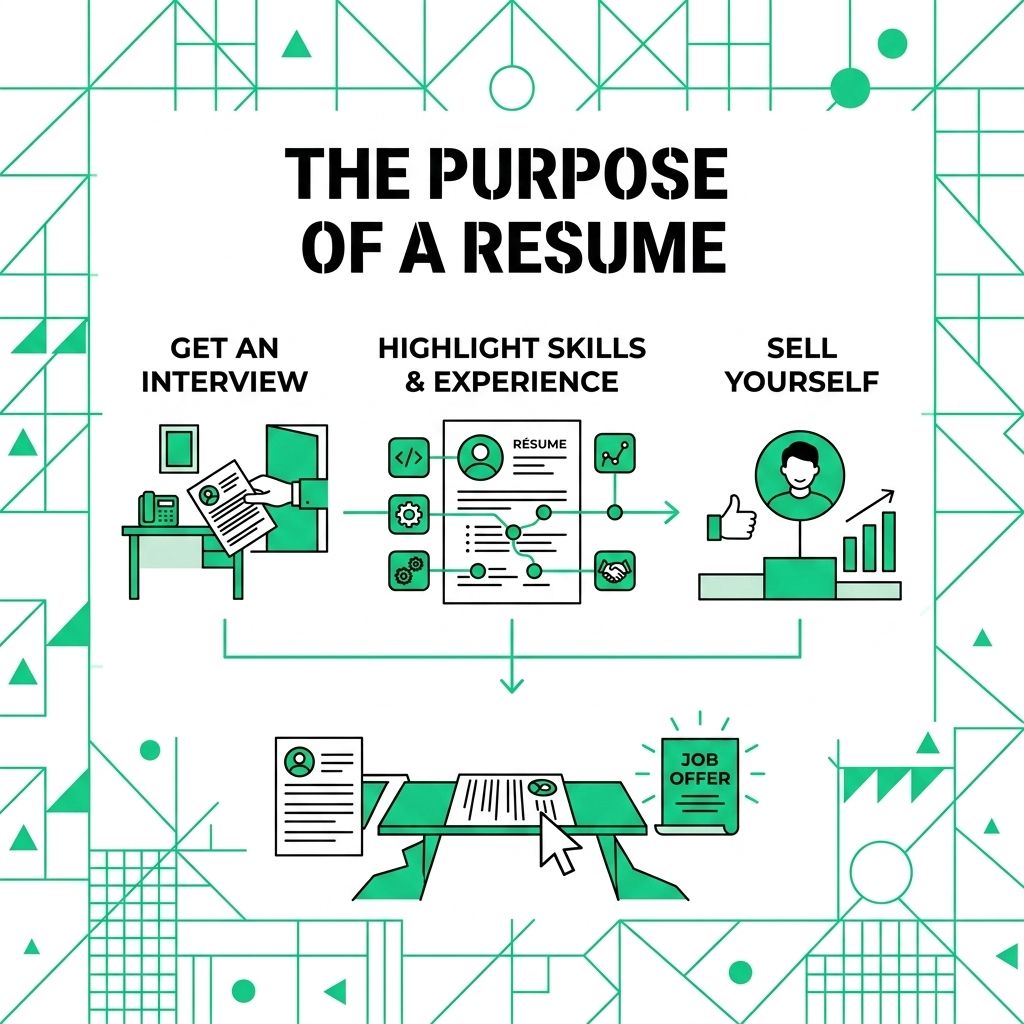
A resume is not meant to get you hired by itself. Its first job is simpler. It should help the employer decide whether to interview you.
That narrow purpose makes writing easier. You do not need to include everything. You need to include the details that prove fit for the role.
The Two Sides of a Resume
CareerOneStop explains that employers use resumes to quickly see whether a person's background fits a job opening. Its resume overview is a helpful reminder to keep the document focused and easy to read.
Build a Resume That Leads to an Interview
Each section should make the interview decision easier. If a detail does not support the target job, cut it or move it lower.
1. Answer the main questions quickly
The top of the resume should tell the reader who you are and why the role fits.
- Define who you are: Use a clear professional title or summary line.
- Show relevant experience: Mention the work that matches the posting.
- Lead with proof: Put a strong achievement where it can be seen fast.
Input: A dense paragraph about your whole career.
Output: A short summary and bullets that show role fit.
2. Present solutions to business problems
Companies hire because they need work done. Read the job description and ask what problem the role is meant to solve.
Input: "Managed customer service team."
Output: "Led customer service handoffs and reduced repeat questions through clearer account notes."
3. Match the job description
Use the job posting as a guide. If the employer asks for cross-functional collaboration, project tracking, or customer support, show where you have done that work.
Input: One generic resume sent everywhere.
Output: A tailored resume that uses relevant language from the target role.
The Final Filter
Read each line and ask one question. Does this help the employer decide to interview me for this job?
If the answer is no, revise it or remove it. A focused resume respects the reader's time and gives your best evidence a better chance to be seen.
For a related Working Nomads article, read why a one-page remote resume usually works best guide for candidates before you decide your next step.
What to Read Next
Read resume vs cv and when to use each one if you want a related next step on resume writing.
Use references on your remote resume and when to share them guide for candidates when you need more context before your next decision.
Publishing Articles or Documentation? Remove AI Slop.
Remove repetitive AI filler phrases, robotic patterns, and AI slop to make your content human, engaging, and original.
Applying for Senior Customer Support Specialist Roles?
Boost your callback rate with our 100% free ATS-optimized resume template tailored specifically for remote Senior Customer Support Specialist positions.
Remote Customer Support Specialist Resume Template
Highlights customer empathy, ticket resolution speed, Zendesk/Intercom power workflows, and self-serve documentation.
ATS Keyword Scanner
Check your resume against remote job descriptions to find missing keywords and boost your score.
Tailored Cover Letter
Generate a personalized, high-converting remote cover letter emphasizing async communication.