Three Hiring Rules for Non-Technical Startup Founders
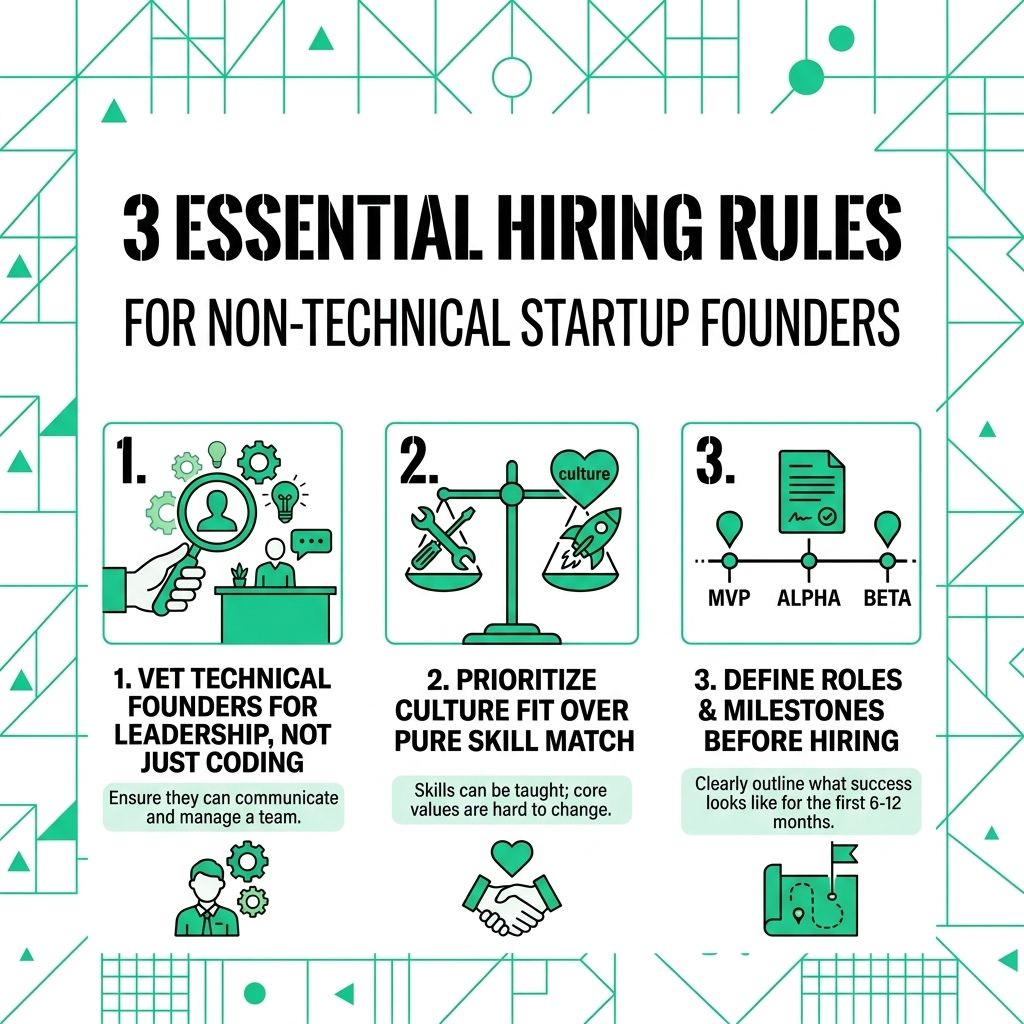
Hiring technical talent as a non-technical founder can feel uncomfortable. You may not know how to judge code quality, architecture choices, or the difference between a strong engineer and a confident talker.
For a related Working Nomads article, read when lean startup works better than scrum checklist before you decide your next step.
You can still run a better process. Focus on evidence, use outside help when needed, and avoid hiring only on personality.
Rule One Define the Work Before You Interview
Start by writing down what the person needs to do in the first few months. Do you need a prototype, a production system, a mobile app, infrastructure, security cleanup, or a technical lead?
SHRM's recruiting guidance points employers toward clear, structured hiring practices. That matters even more when the founder lacks technical depth because the process needs to reduce guesswork.
Source: SHRM recruiting resources
- Write the role outcomes Say what the hire should deliver
- List must-have skills Separate core skills from nice extras
- Set the interview scorecard Decide how you will judge each candidate
Rule Two Use a Technical Evaluator
Do not judge technical skill alone if you are not technical. Bring in a trusted engineer, fractional CTO, advisor, or paid interviewer to review candidates.
Ask that person to evaluate practical skill, code quality, architecture judgment, communication, and whether the candidate can work with your stage of company.
Rule Three Test Real Work Habits
Attitude matters, but it cannot replace skill. Cultural fit also should not mean "someone I would hang out with."
Use a short paid work sample, structured interview, or project review. Ask candidates how they handle unclear requirements, bugs, tradeoffs, deadlines, and feedback.
Watch for Red Flags
Be careful with candidates who cannot explain tradeoffs, dismiss every previous team, avoid specifics, or push expensive rebuilds before understanding the business.
Strong technical hires can explain complex ideas clearly. They should be able to tell you what they know, what they do not know, and what they would check next.
Compare Weak and Strong Startup Hiring
| Hiring step | Weak founder habit | Stronger founder habit |
|---|---|---|
| Role definition | Ask for a generic developer | Define outcomes and must-have skills |
| Skill check | Trust confidence | Use a technical evaluator |
| Interview | Ask loose questions | Use a scorecard |
| Work sample | Ask for unpaid production work | Use a short paid task |
Non-technical founders do not need to fake technical expertise. They need a clear process and the right technical help around the decision.
What to Read Next
Read what are technical skills and why you should keep them updated next steps if you want a related next step on technical leadership.
Use guide to hiring a fractional cto examples when you need more context before your next decision.
Publishing Articles or Documentation? Remove AI Slop.
Remove repetitive AI filler phrases, robotic patterns, and AI slop to make your content human, engaging, and original.
Applying for Senior DevOps & Cloud Engineer Roles?
Boost your callback rate with our 100% free ATS-optimized resume template tailored specifically for remote Senior DevOps & Cloud Engineer positions.
Remote DevOps & Cloud Engineer Resume Template
Tailored for Site Reliability Engineers and DevOps architects managing infrastructure as code and automated deployment pipelines.
ATS Keyword Scanner
Check your resume against remote job descriptions to find missing keywords and boost your score.
Tailored Cover Letter
Generate a personalized, high-converting remote cover letter emphasizing async communication.