The Difference Between Remote Work and Telecommuting
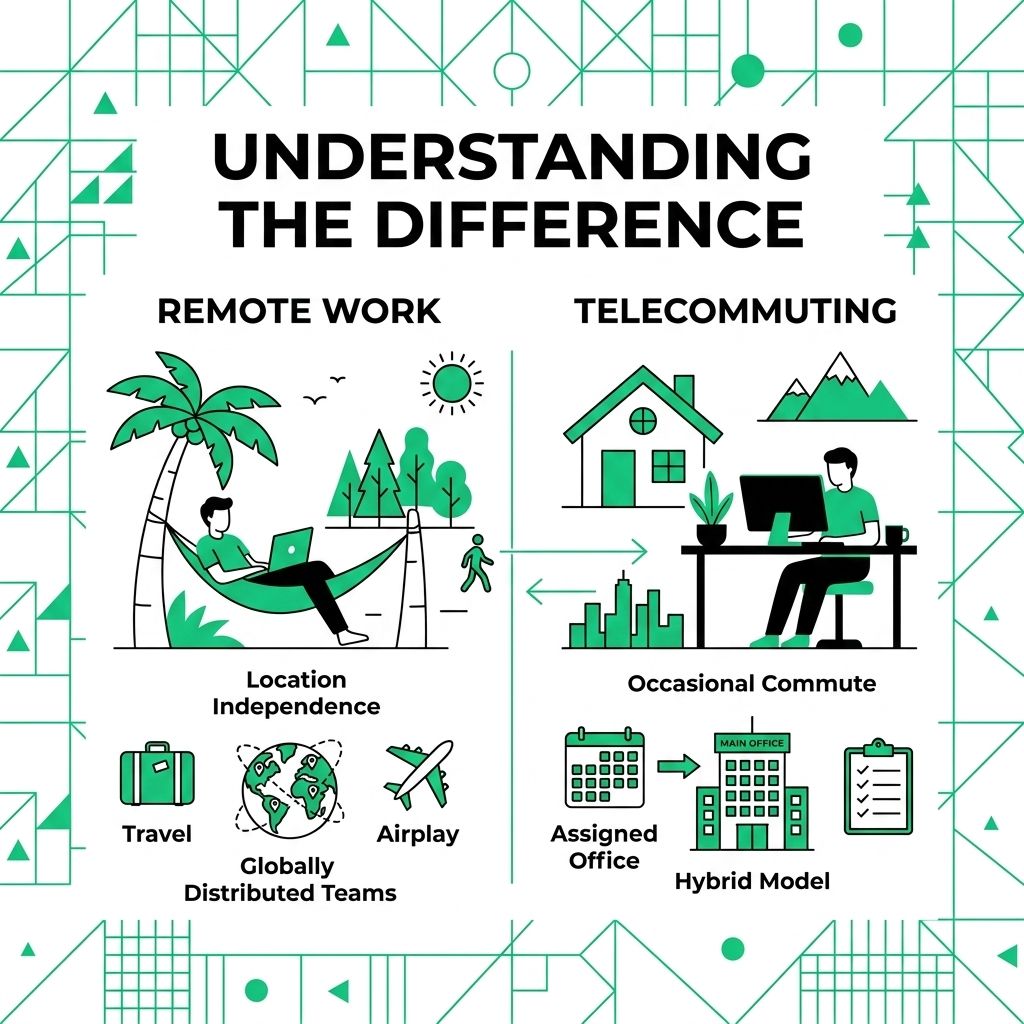
Remote work and telecommuting often get used like they mean the same thing. In casual job posts, they sometimes do. In company policy, they can mean very different setups.
For a related Working Nomads article, read how remote workers can understand tax deductions next steps before you decide your next step.
Read the details before you accept a role. One job may let you work from any approved location. Another may expect you near the office for meetings, training, or specific in-person days.
Define the Work Setup Clearly
Remote work usually means your main work location is away from the company office. You may work from home, another city, or another approved location.
Telecommuting often means you still have a regular office connection, but you work from home on approved days. The U.S. Office of Personnel Management explains telework as a setup where an employee works from an approved alternate worksite and, in practice, may still have scheduled days at the agency worksite.
Source: OPM on the difference between remote work and telework
Look at the Benefits of Remote Work
A remote role can give you more location flexibility. That matters if you want to live away from a major office hub, avoid a long commute, or apply for jobs outside your city.
The key word is approved. Some remote jobs still limit the states or countries where you can work because of tax, payroll, legal, or security rules.
- More location options Apply beyond your local job market
- No regular commute Save time and reduce travel costs
- Better fit for deep work Choose a work setup that supports focus
Know the Downsides of Remote Work
Remote work can feel lonely if the company does not support connection. It can also create timezone issues, slower feedback, and unclear boundaries between home and work.
Ask how the team communicates. Ask how promotions work. Ask whether the company has remote employees in leadership. Those answers tell you more than the job title alone.
Look at the Benefits of Telecommuting
Telecommuting can be a strong middle option. You get some work-from-home days, but you still keep in-person ties to the office.
This can help if you like seeing coworkers, want local mentorship, or work in a role that sometimes needs face-to-face time. You may also get clearer office support for equipment, training, and team events.
Know the Downsides of Telecommuting
Telecommuting usually gives you less location freedom. You may need to live close enough to attend meetings or show up when the company asks.
Policy changes can also affect you fast. A role that starts with three work-from-home days may shift later if leadership changes its office rules.
Compare Remote Work and Telecommuting
| Work setup | What it usually means | What to confirm |
|---|---|---|
| Remote work | Your main work location is away from the office | Approved locations, taxes, equipment, and travel |
| Telecommuting | You work from home some days and still report to an office | Required office days and schedule rules |
| Hybrid work | You split time between home and office | Who sets the schedule and how often it can change |
Choose the setup that matches your life, but read the policy before you trust the label. The title on the job post matters less than the rules in the agreement.
What to Read Next
Read how a vpn helps you stay secure when you work remotely if you want a related next step on remote work.
Use how to ask for vacation days when you work remotely for practical planning when you need more context before your next decision.
Publishing Articles or Documentation? Remove AI Slop.
Remove repetitive AI filler phrases, robotic patterns, and AI slop to make your content human, engaging, and original.
Applying for Executive Virtual Assistant Roles?
Boost your callback rate with our 100% free ATS-optimized resume template tailored specifically for remote Executive Virtual Assistant positions.
Remote Executive Virtual Assistant Resume Template
Engineered for high-performing assistants managing executive inboxes, calendars across time zones, and confidential business ops.
ATS Keyword Scanner
Check your resume against remote job descriptions to find missing keywords and boost your score.
Tailored Cover Letter
Generate a personalized, high-converting remote cover letter emphasizing async communication.