Resume Tips When You Are Overqualified
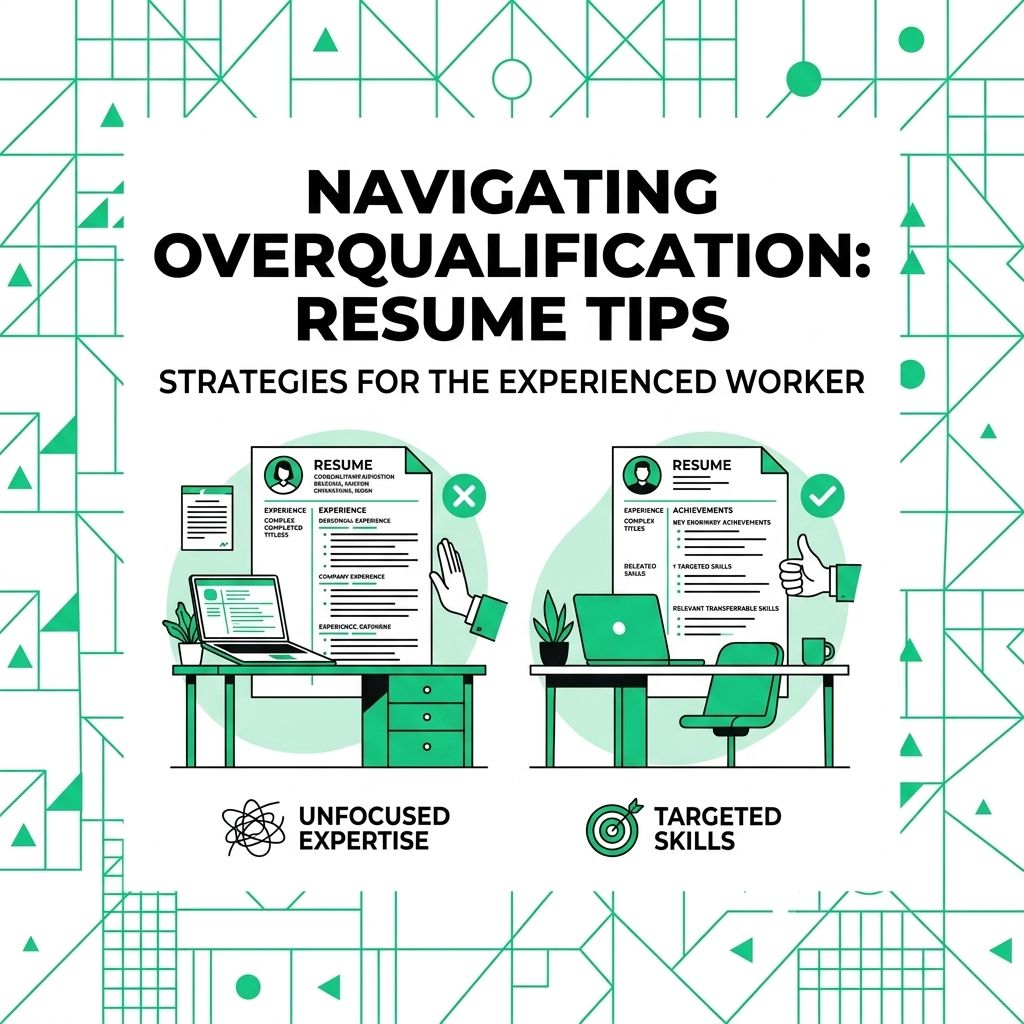
You may have more experience than the job asks for and still want the role. Maybe you want less travel, a better schedule, a new industry, or more hands-on work.
The resume needs to answer the quiet question behind "overqualified." Will you stay? Will you be satisfied? Will you respect the role? Will your experience help the team instead of making the fit feel awkward?
Why a Standard Resume Can Work Against You
A reverse-chronological resume can push your most senior titles to the top. That may be fine for senior roles, but it can create confusion when you are applying for a role with a narrower scope.
AARP's resume guidance notes that older workers may face bias and should make resumes clear, concise, and focused on the target role. Its article on how to write a resume after 50 has practical advice that also helps anyone with a long work history.
Use a Hybrid Resume Structure
A hybrid resume puts relevant skills near the top and keeps the work history focused. It does not hide your background. It helps the reader see why your experience fits this role.
Input: A resume built around decades of leadership, broad strategy, and senior titles.
Output: A resume that highlights hands-on skills, project work, tools, client support, and results that match the posting.
Repackage Your Professional Profile
Your summary should explain fit, not status. Keep it honest and grounded in the work the employer needs done.
- Remove inflated language: Skip terms like visionary, executive leader, or enterprise strategist unless the job asks for that level.
- Highlight hands-on work: Show the tasks, tools, and problems that match the role.
- Explain motivation: Briefly show why this role makes sense for you now.
Curate Your Work History
Long experience can help, but the reader does not need every job you ever held. Choose the roles and bullets that support the job target.
Step one is a tighter timeline
Keep the most relevant recent work. Older roles can be summarized under an earlier experience section if they still matter.
Step two is a sharper job scope
Rewrite bullets so they match the job you want now. Focus on useful work, not hierarchy.
Address Motivation in the Cover Letter
The cover letter can explain why this role is intentional. Keep it simple.
- State the reason clearly: Mention hands-on work, a field shift, schedule fit, or a desire to focus on a narrower type of work.
- Show the benefit: Explain how your experience helps you ramp up faster and support the team.
Control the Interview Narrative
If the interviewer raises overqualification, answer calmly. You do not need to apologize for experience.
Say why the role fits, what you want from it, and how your background helps. The goal is to make the employer feel that your experience is useful, stable, and aligned with the job they actually need filled.
For a related Working Nomads article, read references on your remote resume and when to share them for clearer planning before you decide your next step.
What to Read Next
Read how to list work at home jobs on a resume if you want a related next step on resume writing.
Use why a one-page remote resume usually works best for clearer planning when you need more context before your next decision.
Publishing Articles or Documentation? Remove AI Slop.
Remove repetitive AI filler phrases, robotic patterns, and AI slop to make your content human, engaging, and original.
Applying for Executive Virtual Assistant Roles?
Boost your callback rate with our 100% free ATS-optimized resume template tailored specifically for remote Executive Virtual Assistant positions.
Remote Executive Virtual Assistant Resume Template
Engineered for high-performing assistants managing executive inboxes, calendars across time zones, and confidential business ops.
ATS Keyword Scanner
Check your resume against remote job descriptions to find missing keywords and boost your score.
Tailored Cover Letter
Generate a personalized, high-converting remote cover letter emphasizing async communication.