Remote Work Benefits for Wealthy and Developing Countries
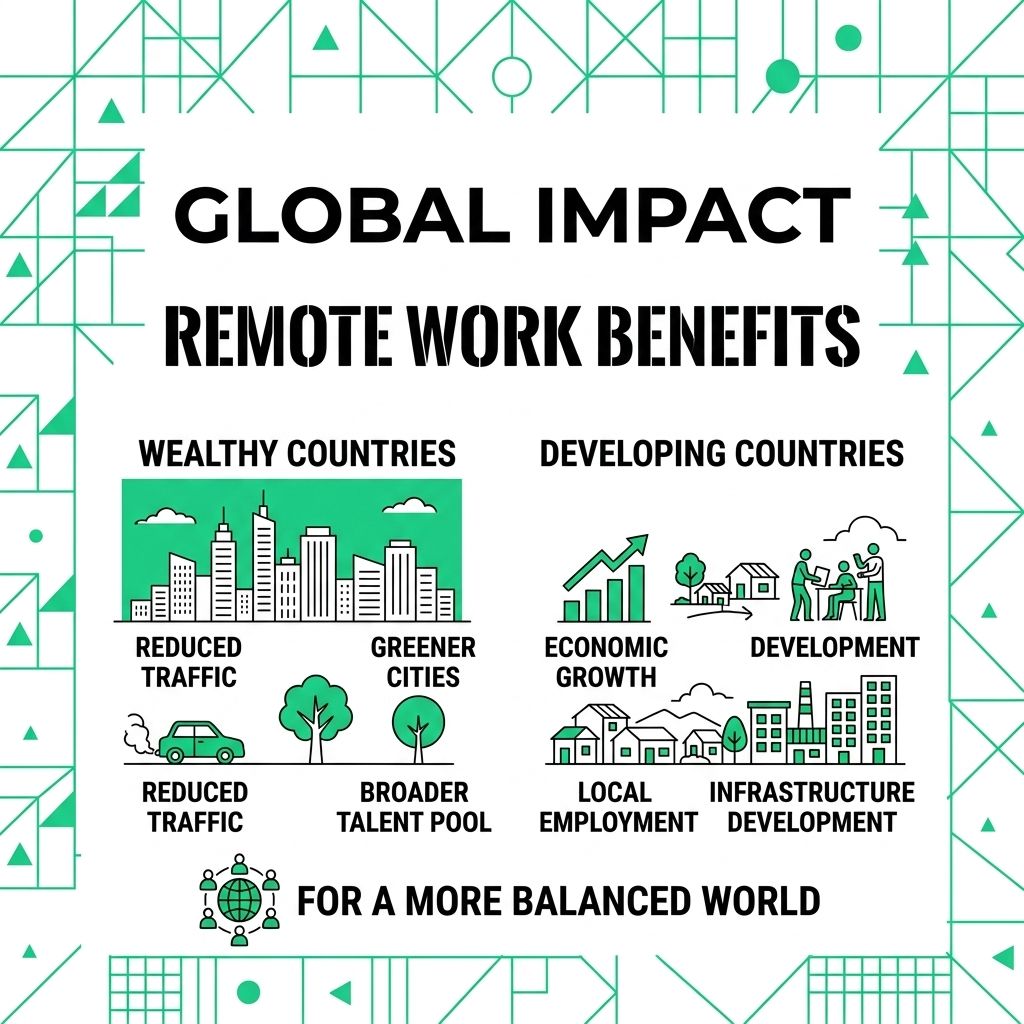
Remote work can help both wealthy and developing countries, but the benefits are not automatic. Good internet access, skills training, labor rules, tax clarity, and employer trust all matter.
For a related Working Nomads article, read how remote workers can understand tax deductions for remote workers before you decide your next step.
The strongest version of remote work expands opportunity without pretending every region starts from the same place.
Help Wealthy Countries Use Talent Better
In wealthy countries, remote work can help employers hire beyond one expensive office city. It can also reduce commute time and support people who need more flexible schedules.
Companies may save on office space, but they may also spend more on software, security, home office support, and team travel. Count both sides before calling it pure savings.
Help Developing Countries Access More Work
Remote work can connect skilled workers with employers outside their local market. That can matter in places where local job options are limited.
Still, access depends on infrastructure and skills. OECD guidance on remote work policy notes that telework requires digital infrastructure such as fiber broadband and mobile connectivity.
Source: OECD report on remote work policy options
- Support better connectivity Reliable internet is basic infrastructure for remote jobs
- Invest in skills Workers need language, technical, and communication skills
- Clarify rules Employers need tax, payroll, and compliance guidance
Reduce Brain Drain When Conditions Are Right
Remote work may help some skilled workers stay near family and community while serving clients or employers elsewhere.
That outcome depends on fair pay, stable access, and real career growth. If remote roles offer only low-paid task work, the benefit is much weaker.
Watch for Unequal Access
Remote work can create new gaps. People with fast internet, quiet space, and strong credentials may benefit first.
Policy makers, employers, and training groups need to think about who is left out. Rural workers, lower-income workers, and people without reliable devices may need extra support.
Manage Cross-Border Risk
Cross-border remote work can raise tax, labor law, data security, and permanent establishment questions.
Employers should not treat "work from anywhere" as simple unless legal and payroll teams have reviewed it. Workers should also check visa, tax, and employment rules before moving.
Compare Benefits and Limits
| Area | Potential benefit | Limit to solve |
|---|---|---|
| Wealthy countries | Wider hiring and less commuting | Compliance, culture, and support costs |
| Developing countries | Access to outside employers | Internet, skills, and fair pay |
| Workers | More location choice | Unequal access to good remote roles |
| Employers | Broader talent reach | Payroll, tax, and security rules |
Remote work can spread opportunity, but only with real support behind it. Better infrastructure, clearer rules, and stronger skills make the benefits more durable.
What to Read Next
Read fractional cto use cases for remote work if you want a related next step on remote work.
Use how to ask for vacation days when you work remotely article 1 53 when you need more context before your next decision.
Publishing Articles or Documentation? Remove AI Slop.
Remove repetitive AI filler phrases, robotic patterns, and AI slop to make your content human, engaging, and original.
Applying for Senior DevOps & Cloud Engineer Roles?
Boost your callback rate with our 100% free ATS-optimized resume template tailored specifically for remote Senior DevOps & Cloud Engineer positions.
Remote DevOps & Cloud Engineer Resume Template
Tailored for Site Reliability Engineers and DevOps architects managing infrastructure as code and automated deployment pipelines.
ATS Keyword Scanner
Check your resume against remote job descriptions to find missing keywords and boost your score.
Tailored Cover Letter
Generate a personalized, high-converting remote cover letter emphasizing async communication.