Reasons You Are Not Hearing Back About Jobs
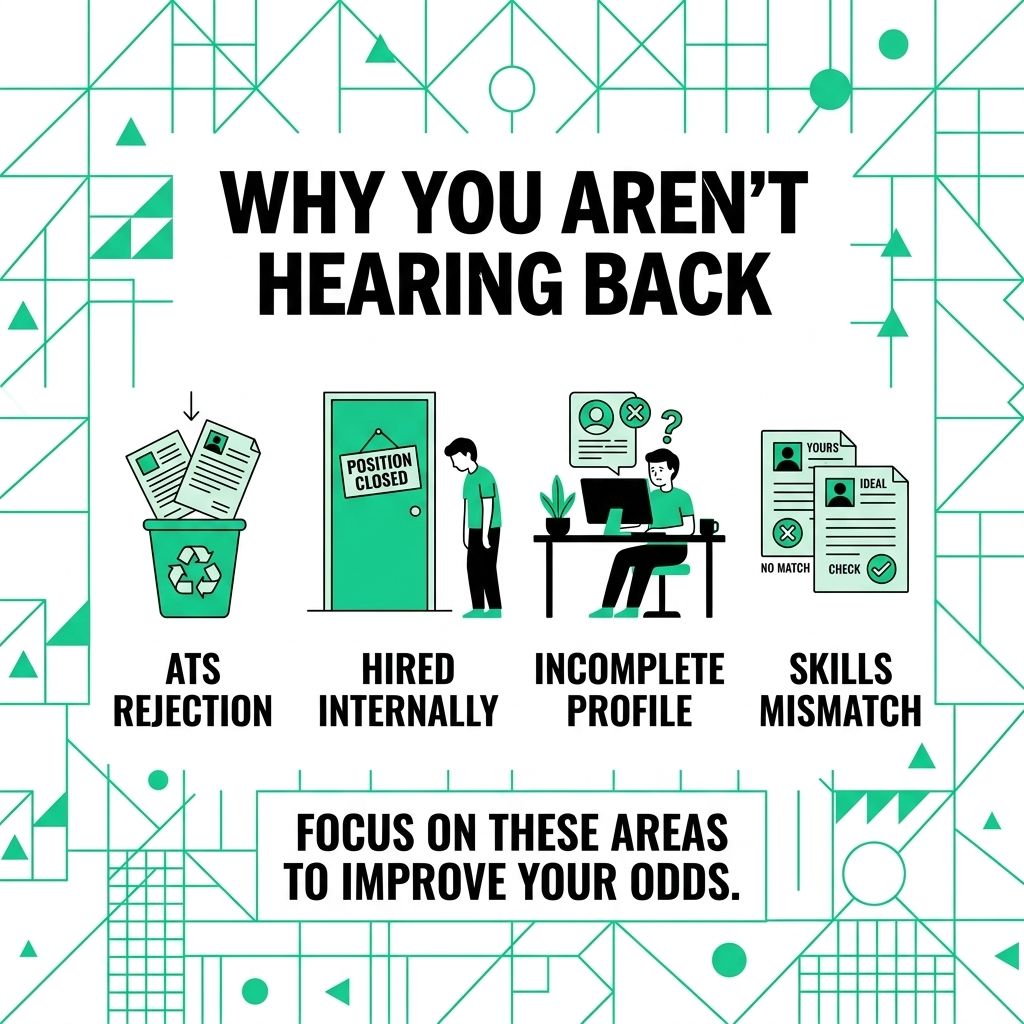
Silence Does Not Always Mean Rejection
No response feels personal. Sometimes it is. Often, it is just the hiring process moving slowly, changing direction, or falling apart behind the scenes.
That does not mean you should sit still. You can improve the application, follow up once, and keep your search moving while the company decides.
Application Silence and Interview Silence
The reason for silence depends on where you are in the process. A resume that gets no response has a different problem from an interview that goes quiet after a strong conversation.
CareerOneStop recommends following up on applications unless the posting says not to. Its guide to planning your job search also points job seekers toward steady tracking and follow-up.
Why applications disappear
- Mismatch with the posting: The resume may not show the skills or keywords the employer asked for.
- Missing materials: A portfolio link, questionnaire, writing sample, or requested document may be absent.
- High volume: The employer may receive more applications than the team can review closely.
Why interviews go quiet
- Timeline changes: The role may be paused, changed, or moved through extra approvals.
- Internal candidates: The company may be comparing outside applicants with internal options.
- Team delays: Decision-makers may be out, split on the choice, or waiting on budget approval.
What to Do After You Apply
Treat each application as one step in a larger search. Track it, follow up when it makes sense, and avoid waiting on one company.
Step one is a short pause
Give the employer time to review applications or finish interviews. If they gave you a timeline, wait until that timeline passes.
Step two is one clear follow-up
Send a polite note to the recruiter or hiring manager.
- Input: A short email that restates your interest and asks whether there is an updated timeline.
- Output: A possible status update, timeline, or no response.
Step three is continued search activity
Keep applying after you send the follow-up. Do not let one silent application stop the rest of your search.
The healthiest job search has movement. Improve each application, follow up once, and keep building options.
For a related Working Nomads article, read reasons why you are not hearing back about remote jobs for beginners before you decide your next step.
What to Read Next
Read find a job while unemployed if you want a related next step on job search.
Use how to respond to a job offer checklist when you need more context before your next decision.
Publishing Articles or Documentation? Remove AI Slop.
Remove repetitive AI filler phrases, robotic patterns, and AI slop to make your content human, engaging, and original.
Applying for Senior Backend Engineer Roles?
Boost your callback rate with our 100% free ATS-optimized resume template tailored specifically for remote Senior Backend Engineer positions.
Remote Backend Engineer Resume Template
Focused on API throughput, database scaling, data modeling, and fault tolerance for distributed systems.
ATS Keyword Scanner
Check your resume against remote job descriptions to find missing keywords and boost your score.
Tailored Cover Letter
Generate a personalized, high-converting remote cover letter emphasizing async communication.