How to Get a Remote Job From Home
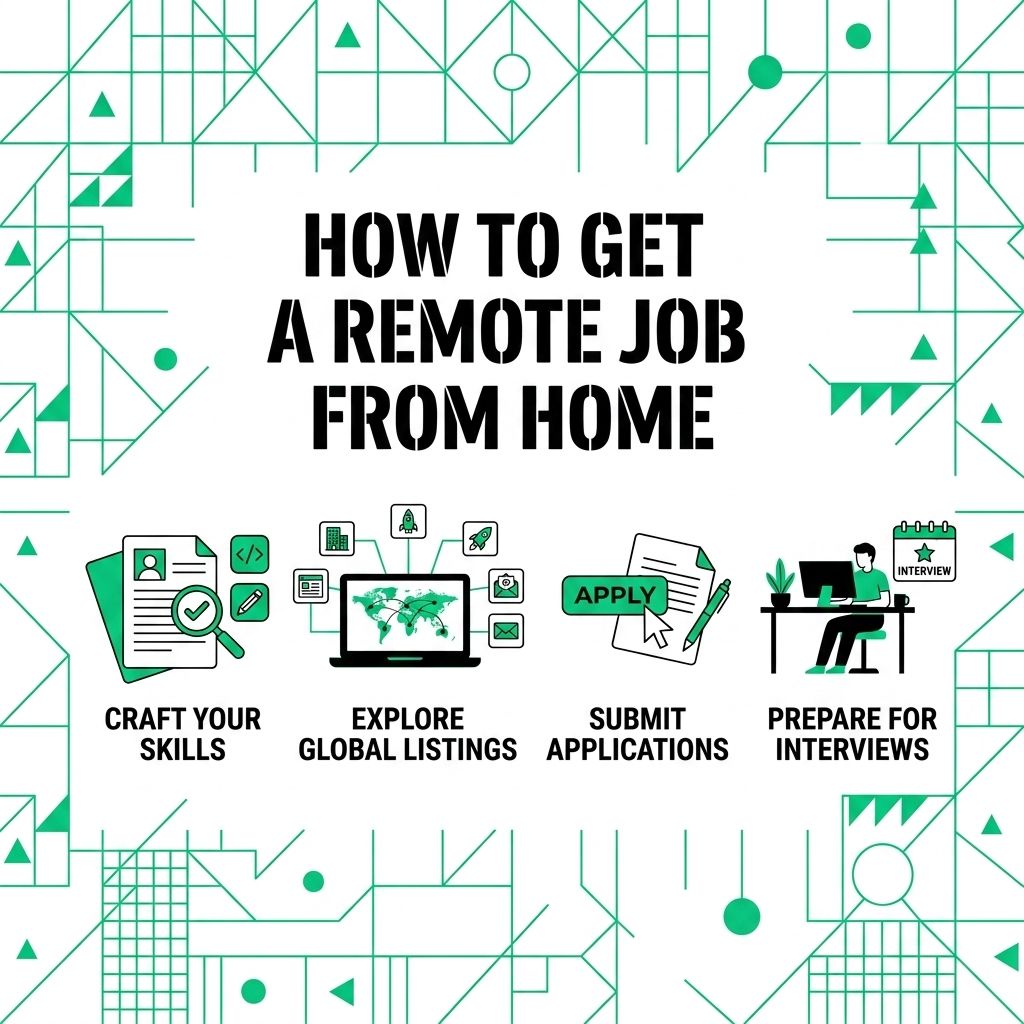
Remote jobs are not just office jobs with a laptop at home. Employers need proof that you can communicate clearly, manage your time, and finish work without someone checking in every hour.
For a related Working Nomads article, read the best remote job boards and how to use them guide before you decide your next step.
CareerOneStop notes that remote jobs exist in many fields, from customer service to software development and research, on its remote jobs guide. Your job is to show which remote-friendly skill you bring and why a team can trust you with it.
Check your remote-ready skills
Start with the work you can do without being in the same room as your team, manager, or customer.
- Engineering and Product: Web development, app development, and product management.
- Creative: Graphic design, UX/UI, and illustration.
- Operations: Customer support, sales, and account management.
- Growth: Digital marketing, SEO, and social media management.
If your current job depends on physical presence, look for a related skill that transfers online. A retail worker might move toward customer support. A teacher might move toward instructional design. A coordinator might move toward project operations.
Make your application feel low-risk
Employers want to see that you can work independently. Your resume, cover letter, and portfolio should make that obvious.
Highlight partial remote experience
If you worked from home even part of the week, say so. Mention the tools you used, the type of work you handled, and how you kept people updated.
Match skills to the employer’s setup
Read the job post closely. If they mention Slack, Jira, HubSpot, Zendesk, Figma, Google Workspace, or Microsoft Teams, connect your experience to similar tools. Show that the learning curve will be small.
Prepare for the remote interview
The interview tests more than your answers. It also shows how you handle video calls, tech issues, and remote communication.
Control your environment
Take the call in the quietest place you can. Test your camera, lighting, and microphone before the interview starts.
Check your internet and audio
Use headphones if they make your voice clearer. Keep a backup hotspot or phone number ready if your internet drops.
Answer remote-work questions directly
Remote interview questions often test self-reliance. Use clear examples.
- Admit knowledge gaps: Say what you do not know, then explain how you would find the answer.
- Show written habits: Talk about status updates, notes, recaps, and documentation.
- Use results: Explain what you finished, not only what you were assigned.
- Stay warm: Remote teams still need people who are pleasant to work with.
Remote hiring is partly about trust. Make it easy for the employer to see that you can do the work and keep people informed.
Check out available positions across various disciplines:
What to Read Next
Read how to respond to a job offer tips if you want a related next step on job search.
Use reasons why you are not hearing back about remote jobs guide when you need more context before your next decision.
Publishing Articles or Documentation? Remove AI Slop.
Remove repetitive AI filler phrases, robotic patterns, and AI slop to make your content human, engaging, and original.
Applying for Senior Full-Stack Engineer Roles?
Boost your callback rate with our 100% free ATS-optimized resume template tailored specifically for remote Senior Full-Stack Engineer positions.
Remote Senior Full-Stack Engineer Resume Template
Engineered specifically for distributed engineering teams. Highlights asynchronous PR reviews, system scalability, and cloud microservices architecture.
ATS Keyword Scanner
Check your resume against remote job descriptions to find missing keywords and boost your score.
Tailored Cover Letter
Generate a personalized, high-converting remote cover letter emphasizing async communication.