How to Find a Job Working From Home
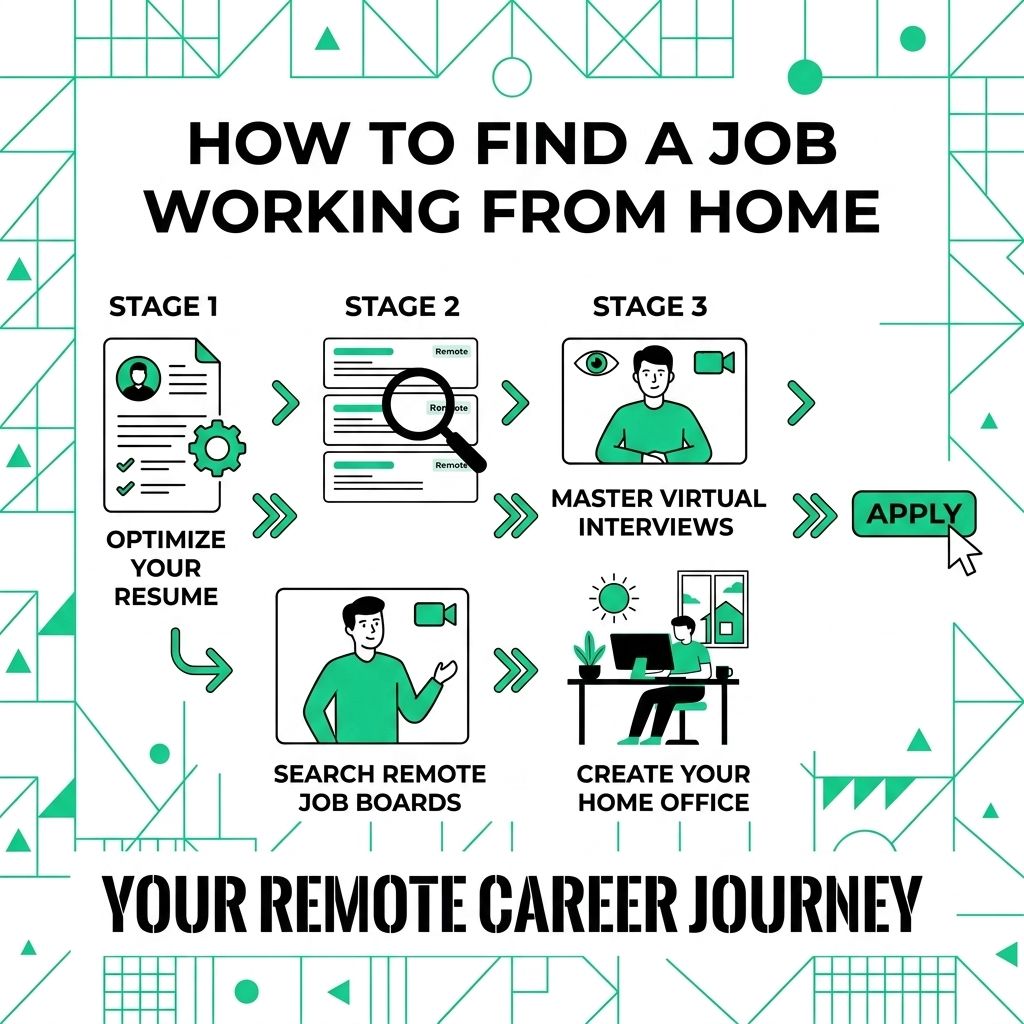
Remote jobs are easier to find when you stop searching for “any work from home job” and start searching for a specific role you can actually do. The best plan is simple: choose your target, prove your remote skills, and apply where remote employers already post.
For a related Working Nomads article, read the best remote job boards and how to use them for hiring teams before you decide your next step.
CareerOneStop’s remote jobs guide notes that remote jobs exist across many fields, but you still need to check whether a role is fully remote, hybrid, or tied to a location.
Decide if remote work fits you
Remote work is not only about skipping the commute. You need to manage your day, communicate clearly, and stay focused without an office around you.
- Set boundaries: Separate work time from home time as much as you can.
- Check your habits: Be honest about whether you work well with less supervision.
- Plan your setup: Make sure your internet, workspace, and schedule can support the job.
Build skills that match remote roles
Look at job posts before choosing a course. If several roles mention the same tool or skill, that is a better signal than a random trend list.
- Take focused courses: Choose training tied to the role you want.
- Practice common tools: Learn Slack, Zoom, Google Workspace, Microsoft Teams, project tools, or role-specific software.
- Create proof: Build a small portfolio, sample project, or case study when the role allows it.
Focus your resume on remote-ready proof
Your resume should show what you can do for this employer. Put the most relevant proof near the top.
- Highlight results: Show how you solved problems, saved time, supported customers, or shipped work.
- Show remote habits: Mention async updates, documentation, cross-time-zone work, or independent project ownership.
- Keep the layout clean: Make the resume easy to scan.
Use remote-specific job boards
Remote-specific boards save time because the roles are already filtered around remote work. Still, read every listing carefully. Some remote jobs require a specific country, state, time zone, or work authorization.
Use Working Nomads and similar boards to narrow by job type, then track each application so you know where you applied and when to follow up.
Show remote skills in the interview
| Skill | Weak Answer | Stronger Remote Answer |
|---|---|---|
| **Communication** | "I’m good at talking to people." | "I write clear updates and confirm owners, dates, and next steps." |
| **Independence** | "I can work alone." | "I plan my week, flag blockers early, and document decisions." |
| **Trust** | "I’m always online." | "I share progress clearly so the team does not have to guess." |
Remote employers hire for trust. Make it easy for them to see how you work when nobody is standing beside you.
What to Read Next
Read how companies set salaries for remote jobs if you want a related next step on job search.
Use reasons why you are not hearing back about remote jobs for career planning when you need more context before your next decision.
Publishing Articles or Documentation? Remove AI Slop.
Remove repetitive AI filler phrases, robotic patterns, and AI slop to make your content human, engaging, and original.
Applying for Universal Remote Professional Roles?
Boost your callback rate with our 100% free ATS-optimized resume template tailored specifically for remote Universal Remote Professional positions.
Classic ATS-Friendly Standard Resume Template
A pure single-column structure with standard semantic headings (Summary, Experience, Skills, Education) that passes every automated applicant scanner.
ATS Keyword Scanner
Check your resume against remote job descriptions to find missing keywords and boost your score.
Tailored Cover Letter
Generate a personalized, high-converting remote cover letter emphasizing async communication.