How to Actually Use "To Whom It May Concern"
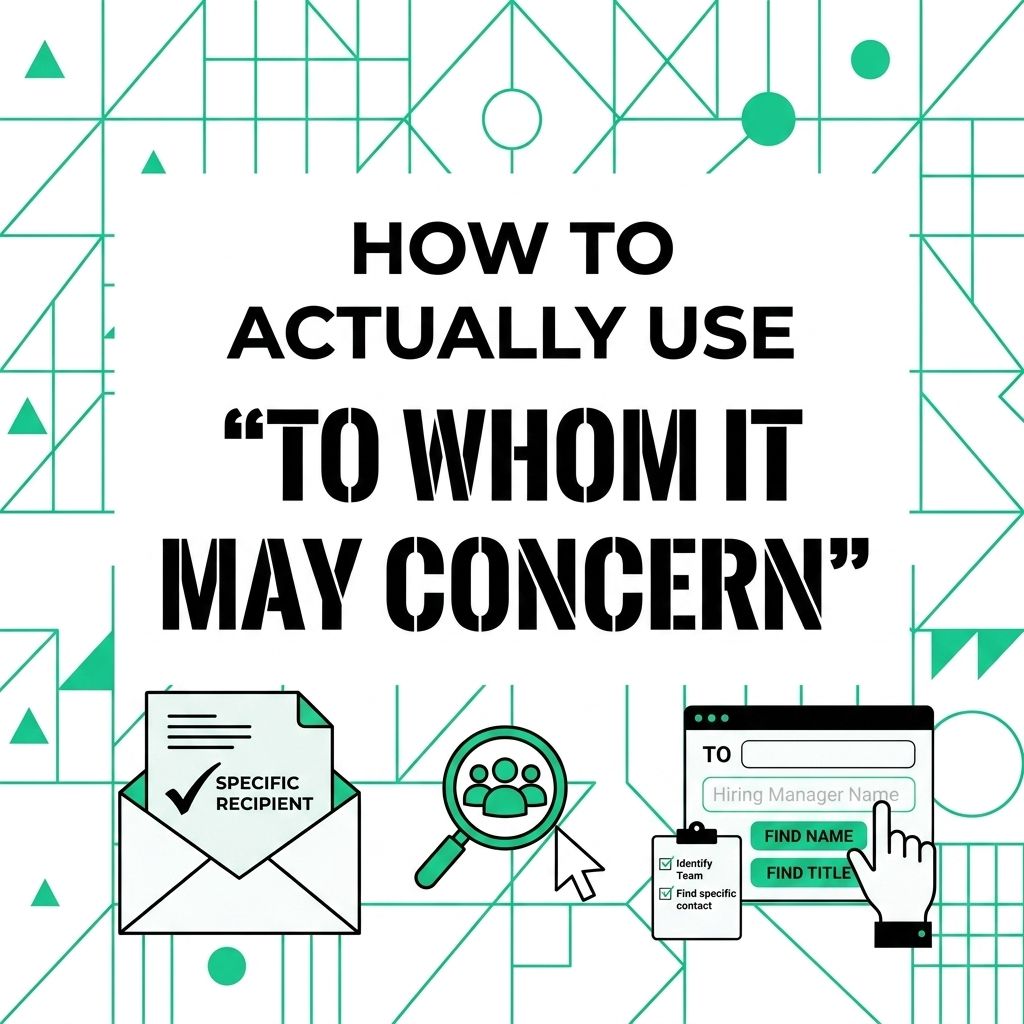
The salutation trap
Most career advice says to avoid “To Whom It May Concern.” That advice is usually right for cover letters, pitches, and networking emails. A named person or a specific team greeting feels more thoughtful.
For a related Working Nomads article, read how to write a thank you note to a remote coworker checklist before you decide your next step.
Still, the phrase is not useless. Some documents are meant for unknown readers, shared inboxes, committees, or formal records. In those cases, the greeting can work when it matches the purpose of the message.
When the generic greeting works
Michigan State University’s career office suggests more direct cover letter alternatives to “To Whom It May Concern” on its cover letter salutation guide. That is a good rule for job applications. For broader formal documents, use the greeting only when the recipient is truly unknown.
- Formal complaints: A generic greeting can fit when the message becomes part of a record.
- Open recommendation letters: The letter may be reused for several unknown recipients.
- Shared inboxes: A department or committee may review the message instead of one person.
- General notices: Some administrative messages need a neutral opening more than a personal one.
The cost of skipping research
The phrase becomes a problem when a better greeting is easy to find. If the job post names the recruiter, use the name. If the company lists the department, use the department. If the hiring team is clear, address the team.
This matters because the greeting is the first signal of effort. It tells the reader whether you paid attention before asking for their time.
Find the right contact
Use this process before you fall back to a generic opening.
- Check the job post: Look for the recruiter, hiring manager, or department name.
- Check the company site: Review the team, leadership, press, or contact pages.
- Search LinkedIn: Look for the department lead or recruiter tied to the role.
- Call or email reception: Ask who handles the topic if the message is important.
The decision matrix
Use this table when you are unsure.
| Scenario | Recommended Greeting | Rationale |
|---|---|---|
| Direct email to a known person | "Dear [First Name]," | Shows that you know who you are contacting. |
| Open letter of recommendation | "To Whom It May Concern," | The letter must function for multiple unknown recipients over time. |
| Shared department inbox (`sales@`) | "Dear [Department] Team," | Addresses the group without guessing a name. |
| Formal notice | "To Whom It May Concern," | Keeps the tone neutral and document-focused. |
Use it with purpose
Use a name when the message is personal. Use a team greeting when the group is known. Use “To Whom It May Concern” only when the reader is truly unknown and the document needs a formal, reusable opening.
What to Read Next
Read how to write a strong resignation letter if you want a related next step on job search letters.
Use what is a letter of intent examples when you need more context before your next decision.
Publishing Articles or Documentation? Remove AI Slop.
Remove repetitive AI filler phrases, robotic patterns, and AI slop to make your content human, engaging, and original.
Applying for Growth Marketing & SEO Specialist Roles?
Boost your callback rate with our 100% free ATS-optimized resume template tailored specifically for remote Growth Marketing & SEO Specialist positions.
Remote Growth Marketing & SEO Specialist Resume Template
Built for performance marketers and organic search experts scaling visitor-to-customer acquisition funnels.
ATS Keyword Scanner
Check your resume against remote job descriptions to find missing keywords and boost your score.
Tailored Cover Letter
Generate a personalized, high-converting remote cover letter emphasizing async communication.