9 Common Resume Mistakes And How To Avoid Them
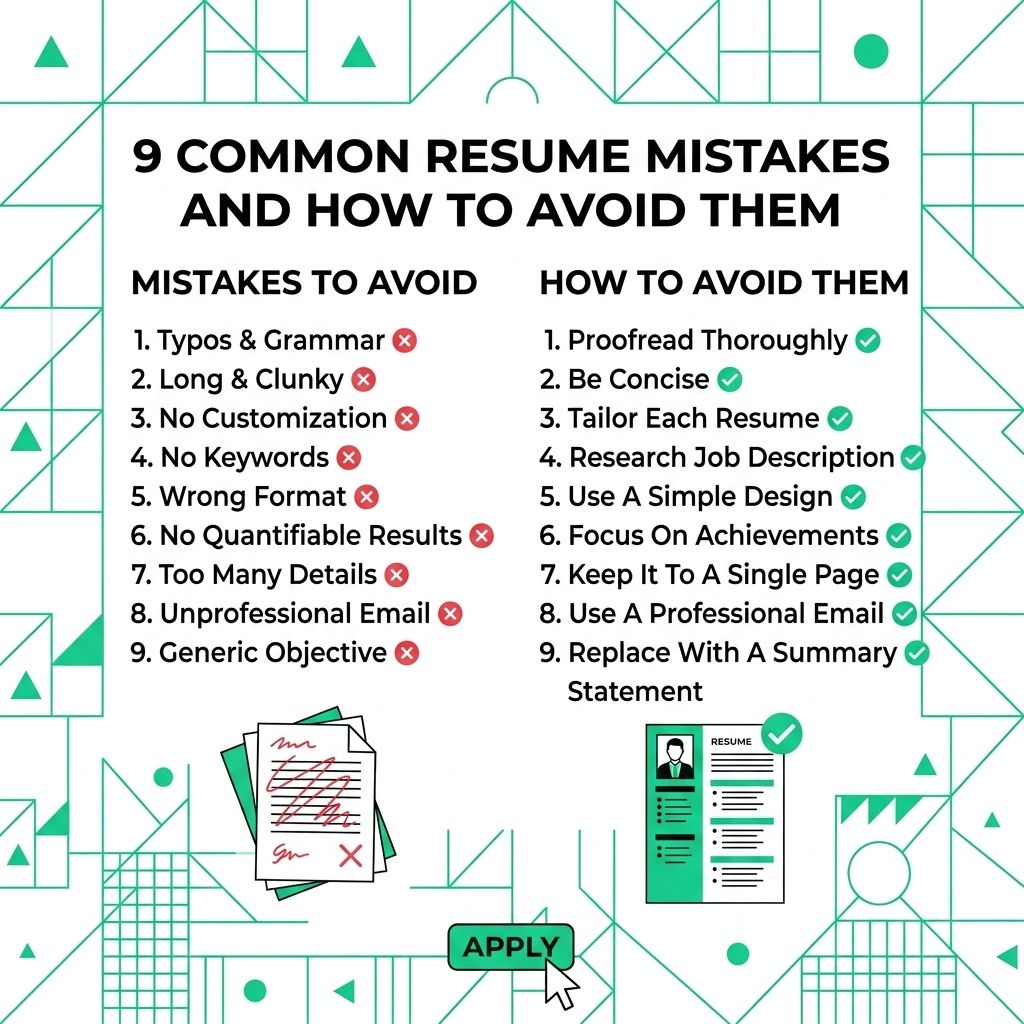
Your resume does not need to impress everyone. It needs to make the right employer understand your fit quickly. Most resume mistakes happen when the document is too broad, too crowded, or too focused on duties instead of proof.
For a related Working Nomads article, read resume relevancy and how to keep it current for remote roles tips before you decide your next step.
CareerOneStop recommends highlighting accomplishments and transferable skills in its resume writing guide. Use that as the standard: show relevant proof, not just a job history.
Common resume mistakes to fix first
Start with the mistakes that make a resume harder to trust or scan.
- Generic resume: Match your skills and examples to the job post.
- No clear summary: Use a short summary that names your role, strengths, and fit.
- Duties without results: Replace task lists with outcomes when you can.
- Casual email address: Use a simple professional email.
- Missing keywords: Include the tools, role terms, and skills the employer used in the posting.
Format and language mistakes
A good resume is easy to read. The layout should support the content, not compete with it.
- Too much content: Keep the most relevant information and cut the rest.
- Hard-to-read design: Use a clean layout, readable font, and consistent spacing.
- Passive language: Start bullets with clear action and result.
- Typos: Read it out loud and ask another person to check it.
- Old information: Update the resume before you urgently need it.
Old habits and better fixes
| Resume Area | Weak Approach | Better Approach |
|---|---|---|
| **Length** | Several pages of everything you did | Focused experience tied to the target role |
| **Language** | Vague duties | Clear actions and outcomes |
| **Intro** | Generic objective | Targeted summary |
| **Contact info** | Casual email | Professional email |
| **Skills** | Long random list | Skills proven in bullets or projects |
Review the resume from the reader’s point of view. Can they see the role you want, the proof you bring, and the reason to interview you within the first scan?
What to Read Next
Read why a one-page remote resume usually works best for remote hiring if you want a related next step on resume writing.
Use references on your remote resume and when to share them for remote hiring when you need more context before your next decision.
Publishing Articles or Documentation? Remove AI Slop.
Remove repetitive AI filler phrases, robotic patterns, and AI slop to make your content human, engaging, and original.
Applying for Senior Content Strategist & Copywriter Roles?
Boost your callback rate with our 100% free ATS-optimized resume template tailored specifically for remote Senior Content Strategist & Copywriter positions.
Remote Content Marketer & Copywriter Resume Template
Crafted for writers who produce high-converting long-form guides, B2B case studies, and email nurture sequences for distributed teams.
ATS Keyword Scanner
Check your resume against remote job descriptions to find missing keywords and boost your score.
Tailored Cover Letter
Generate a personalized, high-converting remote cover letter emphasizing async communication.